As the year winds down and the busiest period is behind us, I’m taking a moment to reflect on 2025.
The state of AI
One year ago, as we were approaching 2025, I found myself asking a simple but uncomfortable question:
“Are we beginning to hit significant roadblocks with AI, and are the returns meeting the massive expectations? Will 2025 mirror the frenzy of 2024, or are we entering a phase of steady, incremental progress?”
🔭 TL;DR : The frenzy has cooled, but the foundations are getting stronger and that may be exactly what the ecosystem needs before the next true inflection point.
- ⛔ Pilot paralysis is real
Many companies remain stuck in pilot mode. While expectations for AI are high, organizational readiness and available budgets often lag behind, creating a clear gap that prevents AI from scaling into production. - 📈 Building is easy, scaling is hard
Assembling intelligent systems can now be done in hours (marketing says minutes). The real challenge starts when you try to scale and that’s where most initiatives stall. Data is the real bottleneck / Models are not the problem. Scaling AI requires accurate, well-governed, and accessible data. Preparing data for AI is becoming a top strategic priority. - 💥Context engineering is the real complexity
Feeding AI with the right context at the right time is hard. It’s a mix of user intent, short- and long-term memory, domain knowledge, grounded data, tool outputs, and more. This is system architecture, not prompt tweaking. - 🤠 Opus 4.5 taught us that models now have personalities. Opus is the stubborn unicorn, the cowboy who makes bold moves, the one that can make dreams come true and the same one that will completely wreck your codebase if it isn’t explicitly constrained.
- 👟Acceleration is not the real value
AI clearly helps us move faster but speed alone isn’t the point. The real value is in transforming how we work and how businesses operate. In software development, frontier models Opus4.5, tools such as Claude code and practices like Specification-Driven Development are already reshaping the SDLC. They introduce tighter feedback loops, evolving roles, and new patterns of human-AI collaboration where intent, constraints, and judgment matter as much as the code itself.
Learn and Share
Looking back, 2025 was a very active year for me within the Azure community.
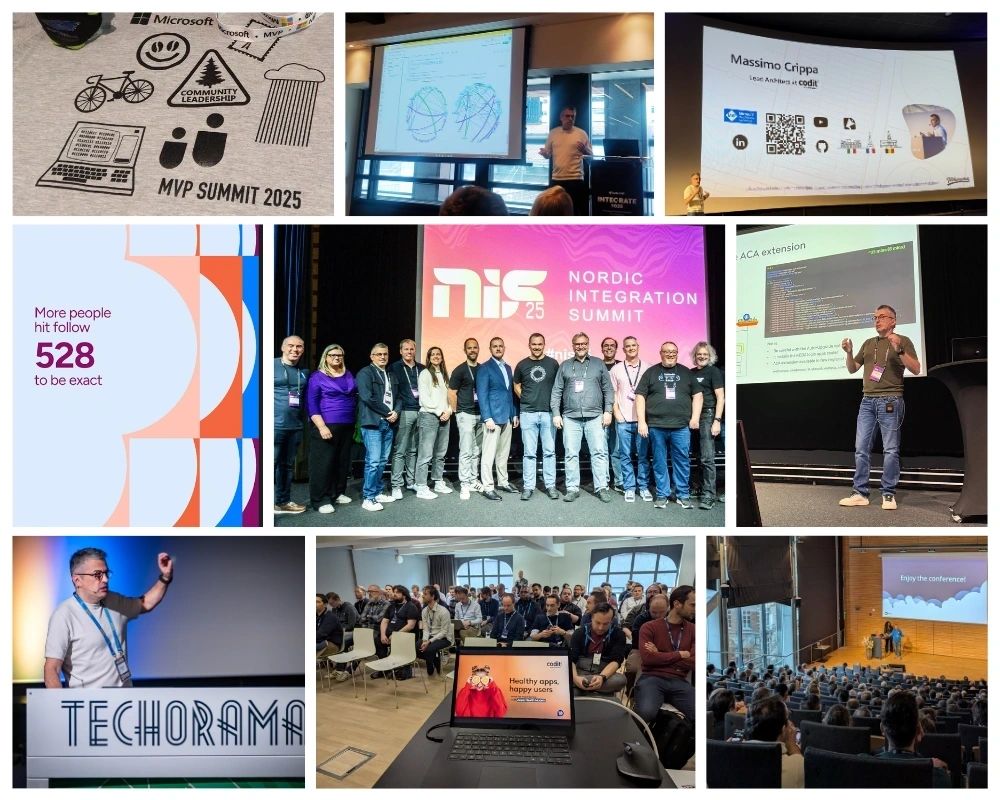
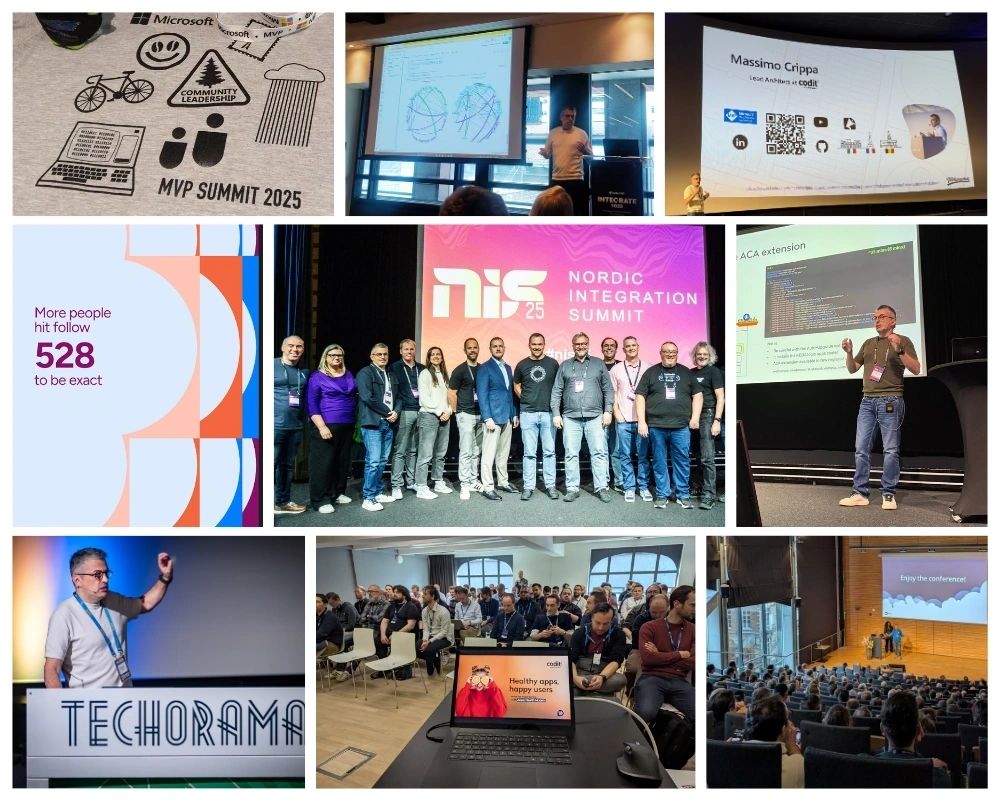
- 🎤 I spoke at 5 conferences and 4 community events, sharing hands-on experience around Integration, API Management, and Observability. Thanks to these opportunities, I met many new people and passionate tech enthusiasts, had countless conversations, and learned a tremendous amount along the way. I’m especially happy to see the Nordic Integration Summit (NIS) continue to grow and establish itself as a reference conference for integration specialists in Europe. On a more personal note, I’m proud of the great feedback I received on my recent talk about Health Models, which was scored among the top presentations at CloudBrew.
- 🚨 APIM Hotrod: Kicking off Season 2 took more time than expected, but it marked the start of a new journey where we explore Azure Architect personas from different angles, beyond just technology.
- 📖 I reviewed a technical book for the first time: The Azure Cloud Native Architecture Mapbook, Second Edition. This latest effort from my partner-in-crime Stéphane Eyskens, fresh from the press and released on December 5th, was a great experience. Technically reviewing a book requires discipline, attention to detail, and the ability to challenge ideas while staying aligned with the author’s vision.
- 📝 On the flip side, I was less productive with blog posts. Only five articles were published, with a couple still stuck in draft mode and likely destined to never see the light of day.
Thank you for being part of this journey whether through your comments, messages, or simply engaging with the content. Looking ahead, I’m excited to keep contributing to the community, learn and exploring new challenges in 2026.